Traditional farming methods
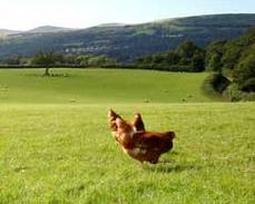
At Freeranger Eggs, we operate as a traditional mixed farm with sheep and cattle as well as our free range hens.
Our chickens are kept in small flocks of 200 – 400 birds with separate paddocks, mobile roosting sheds and laying boxes filled with wood shavings. None of our processes is automated. Our outdoor stocking density is 15 - 40 hens per hectare.
Eggs are collected by hand several times each day and taken to the grading room where they are candled (passed over a light to check for imperfections) graded for size and then packed in cartons or on trays ready for delivery.
They are usually in the cool room within an hour or so of being laid to guarantee top quality. Our production, grading, packing and storage process are detailed in our HACCP-based Food Safety and Quality Assurance Program. Our eggs are delivered within hours or, at most, a couple days of being laid. Each week we never have any eggs left.
Every flock has several feeding bins and watering points which are checked at least twice a day to ensure that feed and water are constantly available for our hens.
The feed we use is a mash of natural grains containing no meat meal and no colouring additives, mixed to our specifications by a Feedsafe certified feed mill. On many egg farms, meat meal is used to boost the protein content of the processed feed and this is often derived from dead chickens. We don't think that's a good idea!
Colouring additives in feed are also an industry standard, to maintain yolk colour. Variations in yolk colour is one way for customers to be sure that the eggs they are buying really are free range. The yolks will often vary in colour depending on what the hens have been eating and the time of year. So if the colour is always a bright orange, it's almost certain that the hens have been fed additives. Some suppliers claim that the additives are 'natural'. All that really means is that they are manufactured and processed in a laboratory, from ingredients like capsicum or marigold which generate allergic reactions in some people. Most of the additives are synthetic.
Our mobile sheds are moved around their paddocks on a weekly cycle to ensure that grass cover is maintained and that the sheds are not surrounded by a sea of mud.
If the areas around sheds are dirty, it's likely that mud and manure on the feet of the hens will transfer to the nests and will contaminate the eggs. With proper management and clean nest boxes, eggs should not be dirty. At Freeranger Eggs there is no need for eggs to be washed – any slight marks on the shells are removed by a light buffing with an abrasive pad.
Washing eggs removes a natural bloom on the surface of the egg and can increase the entry of bacteria into the eggs even when correct washing temperatures and sanitising solutions are maintained.
Our hens have 24 hour access to pasture. At night, some sleep outside in the grass or in trees or bushes – protected from predators by their guardian dogs. If there is a particular predator problem in one of our paddocks, we may have to close up a shed at night to protect the flock. But that seldom happens.
We deliver our eggs to retail outlets, restaurants and direct to home delivery customers.
Our eggs never hang around very long. They are usually delivered to customers within a day or two of being laid. But, in any case, we have a strict policy that no eggs will be sold by us if they are more than a week old even though eggs which are stored correctly have a shelf life of at least four weeks.
CARBON FOOTPRINT
At Freeranger Eggs, we limit the farm's carbon footprint by imposing a food miles policy for deliveries, using recycled materials and equipment whenever we can, using solar power and mechanical processes - such as collecting eggs by hand and hand cultivation of the farm vegetable garden - as well as an effective waste reduction programme.
As a result, the farm generates only about 60 tonnes of CO2 each year.
But we are better than carbon neutral. Our average organic matter in soil tests was 4.1 per cent in 2004, in 2006 it was 6.0 per cent, and in 2010 it was 7.9 per cent. Calculations based on 2-inch deep samples, show that over those years we sequestered about 14 tons of CO2 per acre or four tonnes of carbon per acre on the grasslands on our property. We haven't bothered with further testing and calculations because no-one is interested.
We apply no chemical fertilisers, herbicides, or pesticides and we believe this policy increases the biological life in the soil and increases the rate of carbon sequestration. All manure is spread on the pastures and in our vegetable garden, minimising methane emissions. We practice rotational grazing on our pastures which has a variable effect with each rotation – taking advantage of photosynthesis to pull CO2 into the plants and then into the roots from where it transfers to the soil.
In addition, every year at least another tonne of CO2 per acre continues to be sequestered by the regular growth and replacement of Kangaroo Apples in our main paddocks.
As we have protected native vegetation on approximately 100 acres of the property, regeneration sequesters a further tonne of CO2 per acre.
This brings a grand total of 1500 tonnes of CO2 sequestered on our property over five years – an average rate of 300 tonnes per year compared with the farm's carbon output of around 60 tonnes.
On days of full sun the solar panels on the farm shed generate 13 - 17kW of electricity a day and as on average we consume just 9kW a day it helps our bottom line.
How's that for being carbon neutral! A net carbon benefit of 240 tonnes of CO2 per year and no-one pays us a dollar for doing it.
Our chickens are kept in small flocks of 200 – 400 birds with separate paddocks, mobile roosting sheds and laying boxes filled with wood shavings. None of our processes is automated. Our outdoor stocking density is 15 - 40 hens per hectare.
Eggs are collected by hand several times each day and taken to the grading room where they are candled (passed over a light to check for imperfections) graded for size and then packed in cartons or on trays ready for delivery.
They are usually in the cool room within an hour or so of being laid to guarantee top quality. Our production, grading, packing and storage process are detailed in our HACCP-based Food Safety and Quality Assurance Program. Our eggs are delivered within hours or, at most, a couple days of being laid. Each week we never have any eggs left.
Every flock has several feeding bins and watering points which are checked at least twice a day to ensure that feed and water are constantly available for our hens.
The feed we use is a mash of natural grains containing no meat meal and no colouring additives, mixed to our specifications by a Feedsafe certified feed mill. On many egg farms, meat meal is used to boost the protein content of the processed feed and this is often derived from dead chickens. We don't think that's a good idea!
Colouring additives in feed are also an industry standard, to maintain yolk colour. Variations in yolk colour is one way for customers to be sure that the eggs they are buying really are free range. The yolks will often vary in colour depending on what the hens have been eating and the time of year. So if the colour is always a bright orange, it's almost certain that the hens have been fed additives. Some suppliers claim that the additives are 'natural'. All that really means is that they are manufactured and processed in a laboratory, from ingredients like capsicum or marigold which generate allergic reactions in some people. Most of the additives are synthetic.
Our mobile sheds are moved around their paddocks on a weekly cycle to ensure that grass cover is maintained and that the sheds are not surrounded by a sea of mud.
If the areas around sheds are dirty, it's likely that mud and manure on the feet of the hens will transfer to the nests and will contaminate the eggs. With proper management and clean nest boxes, eggs should not be dirty. At Freeranger Eggs there is no need for eggs to be washed – any slight marks on the shells are removed by a light buffing with an abrasive pad.
Washing eggs removes a natural bloom on the surface of the egg and can increase the entry of bacteria into the eggs even when correct washing temperatures and sanitising solutions are maintained.
Our hens have 24 hour access to pasture. At night, some sleep outside in the grass or in trees or bushes – protected from predators by their guardian dogs. If there is a particular predator problem in one of our paddocks, we may have to close up a shed at night to protect the flock. But that seldom happens.
We deliver our eggs to retail outlets, restaurants and direct to home delivery customers.
Our eggs never hang around very long. They are usually delivered to customers within a day or two of being laid. But, in any case, we have a strict policy that no eggs will be sold by us if they are more than a week old even though eggs which are stored correctly have a shelf life of at least four weeks.
CARBON FOOTPRINT
At Freeranger Eggs, we limit the farm's carbon footprint by imposing a food miles policy for deliveries, using recycled materials and equipment whenever we can, using solar power and mechanical processes - such as collecting eggs by hand and hand cultivation of the farm vegetable garden - as well as an effective waste reduction programme.
As a result, the farm generates only about 60 tonnes of CO2 each year.
But we are better than carbon neutral. Our average organic matter in soil tests was 4.1 per cent in 2004, in 2006 it was 6.0 per cent, and in 2010 it was 7.9 per cent. Calculations based on 2-inch deep samples, show that over those years we sequestered about 14 tons of CO2 per acre or four tonnes of carbon per acre on the grasslands on our property. We haven't bothered with further testing and calculations because no-one is interested.
We apply no chemical fertilisers, herbicides, or pesticides and we believe this policy increases the biological life in the soil and increases the rate of carbon sequestration. All manure is spread on the pastures and in our vegetable garden, minimising methane emissions. We practice rotational grazing on our pastures which has a variable effect with each rotation – taking advantage of photosynthesis to pull CO2 into the plants and then into the roots from where it transfers to the soil.
In addition, every year at least another tonne of CO2 per acre continues to be sequestered by the regular growth and replacement of Kangaroo Apples in our main paddocks.
As we have protected native vegetation on approximately 100 acres of the property, regeneration sequesters a further tonne of CO2 per acre.
This brings a grand total of 1500 tonnes of CO2 sequestered on our property over five years – an average rate of 300 tonnes per year compared with the farm's carbon output of around 60 tonnes.
On days of full sun the solar panels on the farm shed generate 13 - 17kW of electricity a day and as on average we consume just 9kW a day it helps our bottom line.
How's that for being carbon neutral! A net carbon benefit of 240 tonnes of CO2 per year and no-one pays us a dollar for doing it.
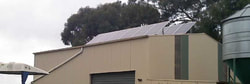 Our 12 solar panels produce up to 13kW of electricity a day, enough to power the whole farm
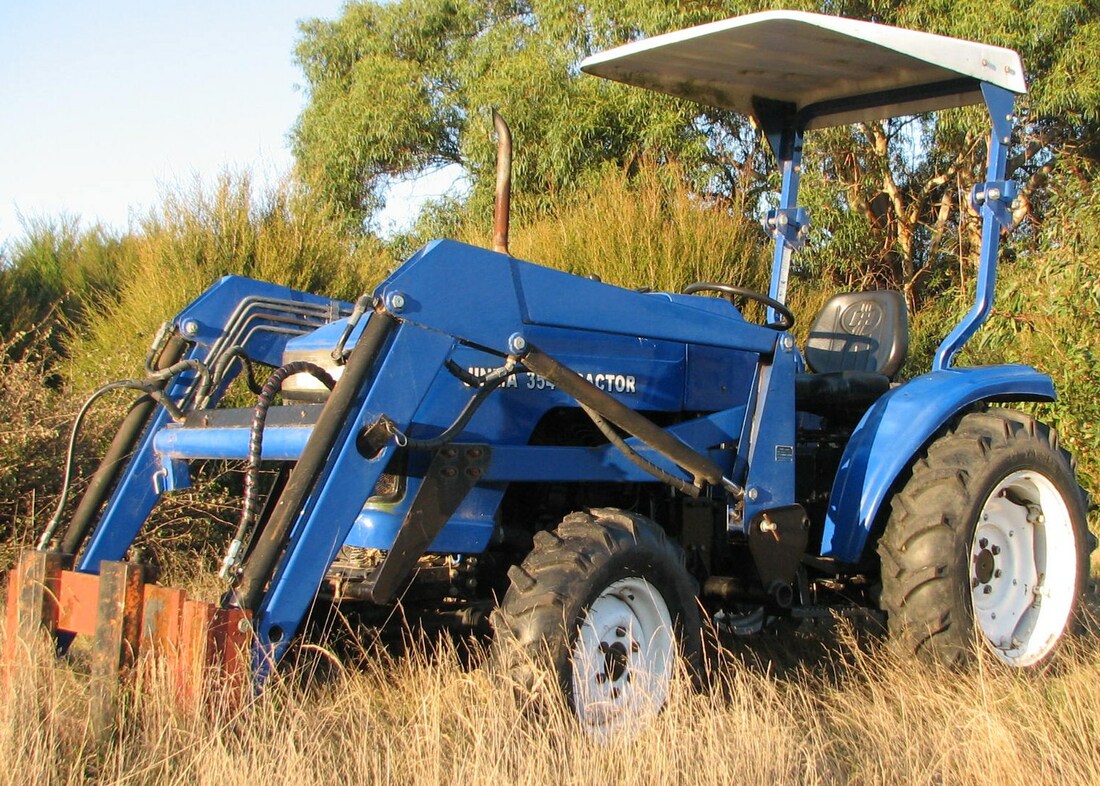
Our Jinma 35hp tractor easily moves our mobile laying sheds.
Free range stocking density
At Freeranger Eggs, we maintain an outdoor stocking of less than 40 hens per hectare even though the Model Code allows an upper limit of 1500 per hectare. The rationale for a maximum stocking density of 1500 chickens per hectare was quite clear. One thousand hens produce approximately 20 tonnes of semi dry poultry manure each year. Allowing the hens to free range over a pasture area has to be designed around the need to maintain pasture cover which is vital for farm sustainability, to limit dust and odour nuisances to neighbours and to avoid off-site pollution caused by the nutrients in the manure.
Maintaining well managed pasture over the range area is seen as the best method to handle these issues and is a requirement of most Standards for the production of free range poultry. A well managed pasture provides an opportunity for retaining and utilizing the nutrients from the poultry flock on site and avoiding the problems of leeching excess nutrients into ground water and nutrient run off into waterways or onto neighbouring properties. Excess poultry manure applied to pasture has been shown to increase soil salinity.
The upper limits are determined by the success in managing the rotation of the flock around the pasture to maintain cover and growth of the pasture and the nutrient load that the system can handle.
The maximum limit on nutrient loads is seen as critical and assessable and this was a major factor in formulating the recommended upper limit on stocking rates for the range during the development of free range egg production standards and the Model Code.
Agronomists assisted with the exercise and they looked at their experience with highly productive dairy pastures in the County of Cumberland (NSW) which had been fertilized with poultry manure and irrigated. These perennial pastures were mainly a Kikuyu Ryegrass Clover pasture which could yield in excess of 20 tonnes of dry matter a year.
Such a pasture would normally be recommended to be fertilized with 172 kg of N from Urea, 22kg of P from Single super and 60 kg of K from Muriate of potash. Poultry manure application rates had traditionally been at a higher rate resulting in high phosphate and potassium levels and an increase in soil ph but it was felt that an application rate of 15 tonnes of poultry manure per ha per year would be sustainable in the longer term. Dairy farms had been using poultry manure at these rates for over twenty years.
Using semi dried poultry manure as the calculation, 15 tonnes of manure per year would be applying 293 kg of N, 195 kg of P and 97.5 kg of K per ha per year to the pasture. This rate would be equivalent to the output of 750 hens. However since the hens would spend the night in the laying house from which the manure could be removed and used at another site it was translated into supporting a daily stocking rate of 1500 hens per hectare.
Maintaining well managed pasture over the range area is seen as the best method to handle these issues and is a requirement of most Standards for the production of free range poultry. A well managed pasture provides an opportunity for retaining and utilizing the nutrients from the poultry flock on site and avoiding the problems of leeching excess nutrients into ground water and nutrient run off into waterways or onto neighbouring properties. Excess poultry manure applied to pasture has been shown to increase soil salinity.
The upper limits are determined by the success in managing the rotation of the flock around the pasture to maintain cover and growth of the pasture and the nutrient load that the system can handle.
The maximum limit on nutrient loads is seen as critical and assessable and this was a major factor in formulating the recommended upper limit on stocking rates for the range during the development of free range egg production standards and the Model Code.
Agronomists assisted with the exercise and they looked at their experience with highly productive dairy pastures in the County of Cumberland (NSW) which had been fertilized with poultry manure and irrigated. These perennial pastures were mainly a Kikuyu Ryegrass Clover pasture which could yield in excess of 20 tonnes of dry matter a year.
Such a pasture would normally be recommended to be fertilized with 172 kg of N from Urea, 22kg of P from Single super and 60 kg of K from Muriate of potash. Poultry manure application rates had traditionally been at a higher rate resulting in high phosphate and potassium levels and an increase in soil ph but it was felt that an application rate of 15 tonnes of poultry manure per ha per year would be sustainable in the longer term. Dairy farms had been using poultry manure at these rates for over twenty years.
Using semi dried poultry manure as the calculation, 15 tonnes of manure per year would be applying 293 kg of N, 195 kg of P and 97.5 kg of K per ha per year to the pasture. This rate would be equivalent to the output of 750 hens. However since the hens would spend the night in the laying house from which the manure could be removed and used at another site it was translated into supporting a daily stocking rate of 1500 hens per hectare.
Checking on yolk colour is a simple process

Using a DSM Colour Fan to
check yolk colour.
All producers need to keep a check on yolk colour to see if the hens are getting enough green feed to maintain the colour of yolks. The easy way, used by most egg farmers in Australia (and around the world for that matter) is to include colouring additives in the chook food.
We don't do that, so the colour of yolks in the eggs laid on our farm will vary depending on the time of year and the availability of green feed.
With mobile sheds which are moved regularly, we are able to maintain pasture cover virtually all year, but in the middle of a drought, when conditions are very dry or there are different reasons for a lack of grass or other vegetation, we make sure that lucerne, other green leafy matter or feed such as pumpkins is available for the hens to try to maintain yolk colour.
Checking the yolk colour is simply a matter of breaking samples of eggs in each batch and using a DSM Yolk Colour Fan to see which number is closest to the egg colour. The industry suggests that a colour of around 10 is ideal - lower numbers are paler and higher numbers are more orange.
Industry researchers say that egg industry revenue is expected to decline 6.4% in 2020-21, due to lower demand from the food-service sector as a result of Government restrictions imposed over the Covid 19 pandemic. That seems to be an optimistic figure given the extent of lockdowns and the closure of food businesses. Small businesses like ours have been affected but problems are likely to be more severe for the intensive operators who are finding it increasingly dificult to con consumers into paying a premium for their version of ‘freerange’.
