Freeranger Eggs - the best eggs
from hens on pasture always free to roam
from hens on pasture always free to roam
Eggs laid on our family farm are supplied to customers within a day or two. You'll never find fresher eggs. As the hens are raised on pasture with a natural diet and total free-range access 24/7, there are no tastier eggs. You will never find our eggs in a supermarket. the eggs are laid to order, and we only supply local regular customers. Eggs are available at Macca;s farm Glen Forbes or from our Grantville farm. At times we also have hens available for people who want their own fresh eggs . Check out our products page. Hens can be picked up at the farm. As a result of our farming methods, the farm has a very low carbon footprint which means our eggs are carbon neutral or carbon negative. Demand for our eggs is always greater than the supply available so we are currently unable to take on new customers.Each week we are beset by IT firms offering SEO services which they claim will boost our sales. Clearly that is impossible as we already sell everything we produce.
This is free range farming
Welcome to Freeranger Eggs - the home of freerange eggs in Stanley Road, Grantville Victoria. This website demonstrates how our 200 acre farm is run and our eBook shows how to set up your own free range farm business. The huge number of shameless people around pretending that the eggs they sell are 'free range' makes it almost impossible for Australian consumers to make informed decisions. Ministers for Consumer Affairs and the Federal Minister for Small business made the decision even more complex as their absurd 10,000 hens per hectare standard for 'free range' eggs simply ensures that NO eggs sold in major supermarkets are actually free range. Australia's mindless labelling laws, are an added problem for consumers and farmers. So if you want free range eggs, don't go to a supermarket. Ignore logos and accreditation claims - they are usually meaningless as accreditation processes have become a joke. Most eggs labelled as free range are from intensive production systems wth high stocking densities and beak-trimmed birds- even the biggest corporate producers resort to buying eggs from other sources to ensure sufficient numbers to meet their contracts with superrmarkets. Freeranger Eggs is one of very few genuine free range farms in the country. We have an outdoor stocking density of 15 - 40 hens per hectare and we only package eggs laid on our farm. The number of hens on our 200 acre ( 80 hectare) property varies but we run a maximum of 1000, depending on the time of year and demand. The farm is registered with Agriculture Victoria. The State Government changed the rules and Councils no longer conduct farm inspections. As a low density free range farm, we are part of a boutique industry with a niche market. We operate with a comprehensive food safety and quality assurance program and We exceed the standards of every accreditation body in Australia.
Don't be fooled by yolk colour
At some times of year yolk colour will not be as vibrant as usual. It is usual for green feed to disappear from paddocks with the heat of summer or the cold of winter. The carotenes in green grass help to produce vibrant, bright yolks. To fool their customers, most egg producers put manufactured colouring additives in their poultry feed to maintain an illusion. We refuse to adulterate the food we give our hens. So always expect variations in yolk colour. Be suspicious if the yolk colour is always the same (even within a one dozen egg pack).
At some times of year yolk colour will not be as vibrant as usual. It is usual for green feed to disappear from paddocks with the heat of summer or the cold of winter. The carotenes in green grass help to produce vibrant, bright yolks. To fool their customers, most egg producers put manufactured colouring additives in their poultry feed to maintain an illusion. We refuse to adulterate the food we give our hens. So always expect variations in yolk colour. Be suspicious if the yolk colour is always the same (even within a one dozen egg pack).
There is a national definition for 'Free Range' egg production, but Ministers for Consumer Affairs were nobbled by big corporate producers and supermarkets. The definition they approved allows a stocking density of 10,000 hens per hectare - an absurd figure, given that the Model Code stipulated a maximum of 1500. There was no science behind the change, they just caved in to corporate lobbyists.
High hen densities are a health risk for consumers and hens, in addition, they impose unsustainable nutrient loads on the land and threaten groundwater and run-off to waterways. At such high outdoor densities, paddocks will be either dustbowls or mudbaths, depending on the time of year. Check our page on sustainable farming to see our philosophy and activities. If you have any questions, please email us on freerangereggs@gmail..com
The Federal Court made several decisions on cases brought by the Australian Consumer and Competition Commission against major egg producers who falsely claimed that the eggs they sold were free range. The judgements cost several businesses $300,000 plus costs. In one case the total cost was $1 million. The judgements revealed a number of farming conditions that impact on whether hens move freely on an open range each day. It will be interesting to see what the Federal Court decides to do with the Ministerial 'free range' standard.
Freeranger Blog
The Freeranger Blog has been judged as one of the top 20 egg farm blogs in the world. You can also check us on Facebook
Freeranger Blog
The Freeranger Blog has been judged as one of the top 20 egg farm blogs in the world. You can also check us on Facebook

Egg labelling is deceptive
Consumer Affairs Ministers from the Commonwealth, States and Territories prepared a national standard on free range egg labelling with the aim of enhancing consumer confidence and certainty about egg labelling.
They failed egg farmers and consumers by accepting the demands of corporate egg producers and the Australian Egg Corporation that the standard must allow a stocking density of 10,000 hens per hectare. The standard endorsed by the Ministers for Consumer Affairs, effectively protects dodgy free range egg producers from prosecution by the ACCC. Eggs laid on intensive laying facilities can now legally be called 'free range' even though those facilities are not accepted as free range by local planning authorities. The Ministers ignored the reality that free range egg production is a niche market - and low volume (or extensive farming methods) are essential factors of production.
More than 5 million people suffer from food-borne illnesses every year in Australia, and food poisoning accounts for an average of 120 deaths. Careless handling of eggs is one source of the problem. Strict temperature control must be maintained on farm, during delivery and by customers. Contamination of eggs can result from egg washing. If the farm has good management procedures, eggs should not be dirty and any light marks on the shell can easily be removed with a dry cloth or abrasive pad.
Consumer Affairs Ministers from the Commonwealth, States and Territories prepared a national standard on free range egg labelling with the aim of enhancing consumer confidence and certainty about egg labelling.
They failed egg farmers and consumers by accepting the demands of corporate egg producers and the Australian Egg Corporation that the standard must allow a stocking density of 10,000 hens per hectare. The standard endorsed by the Ministers for Consumer Affairs, effectively protects dodgy free range egg producers from prosecution by the ACCC. Eggs laid on intensive laying facilities can now legally be called 'free range' even though those facilities are not accepted as free range by local planning authorities. The Ministers ignored the reality that free range egg production is a niche market - and low volume (or extensive farming methods) are essential factors of production.
More than 5 million people suffer from food-borne illnesses every year in Australia, and food poisoning accounts for an average of 120 deaths. Careless handling of eggs is one source of the problem. Strict temperature control must be maintained on farm, during delivery and by customers. Contamination of eggs can result from egg washing. If the farm has good management procedures, eggs should not be dirty and any light marks on the shell can easily be removed with a dry cloth or abrasive pad.
Don't be taken in by dodgy logos or accreditation claims
Freeranger Eggs is currently not involved with any industry accreditation body. We are registered as a free range egg farm with the Department of Environment Land, Water and Planning. In Australia, all accreditation bodies have been shown to be shams – they either have meaningless standards or they don't enforce the standards they pretend to have.
There is no accreditation body in Australia which meets the standards we have maintained on the Freeranger farm.
Allergies and sensitivities
All major egg producers and many small ones - even those which claim to be free range and organic, use colouring additives in the feed they give their hens.
This use is completely unnecessary in a true free range flock, as hens running on quality pasture and at low stocking densities will obtain enough carotenoids from the green feed in the paddock to maintain good yolk colour. The colour will vary – depending on the time of year and what each hen has been eating – but many egg producers want to con consumers by using additives to provide consistent, bright yolk colour.
Many of those additives are synthetic - adding to the chemical cocktail mix in food. But even those which are claimed to be 'natural' are manufactured in factories – often in China. What the
manufacturers mean by using the word 'natural' is that the additives may be derived from natural products but are processed and concentrated into a powder or liquid.
Some of the most widely used egg yolk pigmenters are:
Canthaxanin or Canthaxanthin which appears to be an unsafe additive. It can cause diarrhoea,nausea, stomach cramps, dry and itchy skin, hives, orange or red body secretions, and other side effects.
Do not use canthaxanthin if you experience breathing problems; tightness in the chest; swelling of
the mouth, tongue or throat; a skin rash or hives; you are pregnant or breast-feeding or you are
allergic to vitamin A or carotenoids.
Capsicum
Allergic reactions to capsicum may occur. Stop eating eggs with capsicum-based colouring.
Seek emergency medical attention if you experience symptoms of a serious allergic reaction including
difficulty breathing; closing of the throat; swelling of the lips, tongue, or face; or hives.
Other less serious side effects have also been reported. Talk to your doctor, pharmacist, or health
care provider if you experience upset stomach; heartburn; diarrhoea; migraine attacks or burning
sensation in the mouth or throat.
Use of Capsicum is not recommended if you are pregnant. If you are or will be breast-feeding.
Capsicum colourings can bring on anaphylactic shock.
Marigold
Some people experience breathing problems, tightness in the chest, swelling of the mouth, tongue
or throat. A skin rash or hives may occur.
From the Auckland Allergy Clinic
Article written: September 2001
Salicylate sensitivity is the body’s inability to handle more than a certain amount of salicylates
at any one time. A salicylate sensitive person may have difficulty tolerating certain fruits or
vegetables.
What are salicylates?
Salicylate is a natural chemical made by many plants. It is chemically related to aspirin, which
is a derivative of salicylic acid. It is believed the plant uses it as protection from insects, and
they are everywhere around us.
Although natural salicylates are found in wholesome foods, some individuals have difficulty tolerating even small amounts of them. The reaction to a natural salicylate can be as severe as that to a synthetic additive if the person is highly sensitive. Some people are troubled by only
a very few, but some are troubled by all of them.
What is salicylate sensitivity?
Some adults and children have a low level of tolerance to salicylates and may get symptoms that are dose-related. The tolerated amount varies from one person to another.
All fresh meat, fish, shellfish, poultry, eggs, dairy products, cereals, bread are naturally low in
salicylates
Foods with very high Salicylate content include:
Vegetables:
Capsicum Hot Peppers
Capsaicin is the active component of Capsicum. Pure capsaicin is a volatile, hydrophobic,
colourless, odourless, crystalline to waxy compound.
Capsaicin Factsheet
A UK report on The Adverse Effects of Food Additives on Health, published in the Journal of Orthomolecular Medicine described surveys on food intolerance which showed that as many as 2 in 10 people believe that they react badly to certain foods or to their constituents, whereas less than 2 in every 100 has been considered to be the official figure
Thinking of starting your own free range farm?
How to start a free range farm
Our eBook on establishing a free range egg farm is available at any time. At a cost of just $245. It is a low-cost way of providing all the ideas and tools needed to establish your egg business and will help you prepare your own application to your local Shire to set up a free range farm. There's no need to engage a costly consultant to write the application for you.Free range egg production is a niche market which is why genuine free range eggs are never found in supermarkets Once payment is made, the eBook will be emailed as a Portable Document File (PDF). send payment to our Bendigo Bank account. P &A Westwood BSB 633 000 Account 153356233
At FREERANGER EGGS we guarantee NO CAGES; NO CHEMICALS; NO BEAK TRIMMING; SUSTAINABLE FARMING. OUR STOCKING DENSITY IS LESS THAN 40 HENS PER HECTARE.
NO MANUFACTURED COLOURING ADDITIVES.
NO MANUFACTURED COLOURING ADDITIVES.
The Freeranger Eggs farm at Grantville, near Phillip Island in Victoria, is home for up to1200 Isa Brown chickens. The eggs laid here are basically laid to order - truly 'bespoke eggs'. All our production is sold locally. We run an environmentally sustainable farm with predominantly native pastures, trees and shrubs. Our hens are in flocks of 200 - 300 with mobile roosting and egg laying houses in each paddock. Every flock is protected 24 hours a day by Maremma guardian dogs. The girls work hard to supply customers in our local area. Our Food Miles policy limits sales of our eggs to within an hour of the farm, even though we constantly receive enquiries from Melbourne, interstate and even overseas.Our hens follow the natural rhythms of a wild hen’s year. They’re free from artificial light so there are fewer eggs during autumn and winter.
Free range eggs fresh from the farm have a great flavour. At Freeranger Eggs, just an hour and a half from Melbourne, hens range all day, enjoying fresh air and sunshine as well as wind and rain! If you have never tasted a truly fresh free range chicken egg, you are in for a treat!
Not only are our eggs tastier, but many customers believe they are healthier than eggs laid by hens on factory farms who are crammed into huge barns or from backyard chooks locked in muddy pens and fed pellets containing colouring additives.
Research shows that eggs from pasture-fed hens have more folic acid, vitamin B12, vitamin E and carotenes than hens fed only grain or pellets. US research confirms that there may be a nutritional difference between free range and other eggs. However, some researchers have claimed that free range and cage laid eggs have the same nutritional value. Studies have been undertaken specifically to demonstrate no difference. The research was funded by the corporate egg industry and the hens used were all beak trimmed. The 'free range' hens used in the research may have been allowed access to the outdoors, but as their beaks were trimmed, they could only eat the same grains and food which were available to birds in cages.
Any beaked trimmed birds have great difficulty eating grass, or picking up worms, spiders etc without a full beak - that's the fundamental problem with running large flocks of birds and calling them 'free range'. This type of research is often flawed from the start. The researchers may mean well, but funding is provided with strings attached and linked to specific outcomes - so they are required to meet those specified objectives.
Real free range eggs are as different from normal supermarket eggs as cask wine is from estate bottled wine or canned fruit compared with ripe fruit straight from the tree. Freeranger Eggs are the pick of them.
Our chickens have unlimited access to pasture with a healthy, natural diet. They are fed no meat meal or processed animal-based proteins. No antibiotics are used in their management (unless required by a veterinarian) and no additives are fed to enhance yolk colour. No pesticides or herbicides are used on the pastures where they roam. Because of our low density production system there is no reason for our hens to be beak trimmed.
We provide a supplementary feed of natural grains and our chooks have all-day access to pastures where they forage for insects, grasses and seeds, the way nature intended. They are not locked up in sheds, not even at night except for the first day or so when a new flock of pullets needs to get used to their new home.
There are four basic components to a quality chicken egg; the management of the hens, the feed, the way eggs are handled, packed and stored and the time that passes before you purchase. We know that our eggs reign supreme in all four categories. We have strict quality control and a food safety program which meets HACCP standards. All this, combined with personal delivery, ensures a significantly higher quality product than usually found on a supermarket shelf.
Not only are our eggs tastier, but many customers believe they are healthier than eggs laid by hens on factory farms who are crammed into huge barns or from backyard chooks locked in muddy pens and fed pellets containing colouring additives.
Research shows that eggs from pasture-fed hens have more folic acid, vitamin B12, vitamin E and carotenes than hens fed only grain or pellets. US research confirms that there may be a nutritional difference between free range and other eggs. However, some researchers have claimed that free range and cage laid eggs have the same nutritional value. Studies have been undertaken specifically to demonstrate no difference. The research was funded by the corporate egg industry and the hens used were all beak trimmed. The 'free range' hens used in the research may have been allowed access to the outdoors, but as their beaks were trimmed, they could only eat the same grains and food which were available to birds in cages.
Any beaked trimmed birds have great difficulty eating grass, or picking up worms, spiders etc without a full beak - that's the fundamental problem with running large flocks of birds and calling them 'free range'. This type of research is often flawed from the start. The researchers may mean well, but funding is provided with strings attached and linked to specific outcomes - so they are required to meet those specified objectives.
Real free range eggs are as different from normal supermarket eggs as cask wine is from estate bottled wine or canned fruit compared with ripe fruit straight from the tree. Freeranger Eggs are the pick of them.
Our chickens have unlimited access to pasture with a healthy, natural diet. They are fed no meat meal or processed animal-based proteins. No antibiotics are used in their management (unless required by a veterinarian) and no additives are fed to enhance yolk colour. No pesticides or herbicides are used on the pastures where they roam. Because of our low density production system there is no reason for our hens to be beak trimmed.
We provide a supplementary feed of natural grains and our chooks have all-day access to pastures where they forage for insects, grasses and seeds, the way nature intended. They are not locked up in sheds, not even at night except for the first day or so when a new flock of pullets needs to get used to their new home.
There are four basic components to a quality chicken egg; the management of the hens, the feed, the way eggs are handled, packed and stored and the time that passes before you purchase. We know that our eggs reign supreme in all four categories. We have strict quality control and a food safety program which meets HACCP standards. All this, combined with personal delivery, ensures a significantly higher quality product than usually found on a supermarket shelf.
What do you think 'Free Range' means? Check that you get what you pay for!
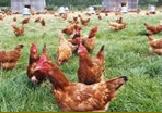
Chickens like to roam
In Australia, and some other countries, most of the eggs which are labelled as 'free range' are laid by birds which have been beak trimmed and are kept in flocks of thousands. Most farms are intensive operations with tens of thousands of hens in sheds. Those chickens seldom go outside on grass but the business owners are happy to charge a premium for the eggs they call 'free range'. Actions launched by the Australian Competition and Consumer Commission against a couple of big egg producers clarified some of the issues around what 'free range' actually means. But Government Ministers changed the rules to protect intensivre producers. Now, the only eggs found in big supermarkets are from intensive producers with up to 10,000 hens per hectare. If you are interested in the industry, follow us on Facebook or the Freeranger Blog. Research conducted for the Poultry Co-operative Research Centre has shown that only 9% of hens on an intensive 'free range' farm actually venture outside their sheds. How those eggs can be labelled as free range is a mystery to us and is a question you can ask your local politicians as well as State and Federal Ministers for Agriculture and Consumer Affairs!
If you want to be sure that the eggs you buy are really free range, be clear about what you think is acceptable and talk to the farmers you buy your eggs from. There are many shonky producers around who buy-in eggs from all over the place, feed their hens pellets containing colouring additives and meat meal which is often derived from dead chicks or 'spent' hens, and and don't meet basic free range standards.
If you want to be sure that the eggs you buy are really free range, be clear about what you think is acceptable and talk to the farmers you buy your eggs from. There are many shonky producers around who buy-in eggs from all over the place, feed their hens pellets containing colouring additives and meat meal which is often derived from dead chicks or 'spent' hens, and and don't meet basic free range standards.
If you like what you see on this website and you want to keep up to date with Australia's egg industry issues - as well as our farm activities, follow us on the Freeranger blog
|
If you are thinking of starting a free range egg farm, check out the e-book on our Products Page.
|
Extra large Megga eggs are available from a big yellow cool box just inside the farm gate 245a Stanley Road, Grantville. Phone us on 0356788483. Phil on mobile 0402070531 and Anne on mobile 0467 545950 All sizes are available at Macca's Farm, Glen Forbes
freeranger Eggs, Private Bag 245a Grantville Australia 3984
freeranger@dcsi.net.au
freeranger Eggs, Private Bag 245a Grantville Australia 3984
freeranger@dcsi.net.au
An end to culling day-old male chicks at hatcheries.
We expect that chicken hatcheries in Australia will soon end the practice of euthanising day old male chicks, removing the key objection to poultry farms by animal activist groups.The Canadian industry body,, Egg Farmers of Ontario has patented a process which it says can determine the sex of a chick before eggs are incubated. Machinery manufacturers should soon have a prototype candling device available to determine the sex of embryos in eggs on the day an egg is laid. Research on embryo identification has been conducted in a number of countries and now systems are available to hatcheries . This will remove one of the major arguments from animal activists against egg farmers. They currently attack even free range farms over the destruction of male chicks at hatcheries because they are regarded as a by-product as they are unable to lay eggs.
